
Beyond the Gap: Advancing Women’s Health – and How the Nordics Are Leading
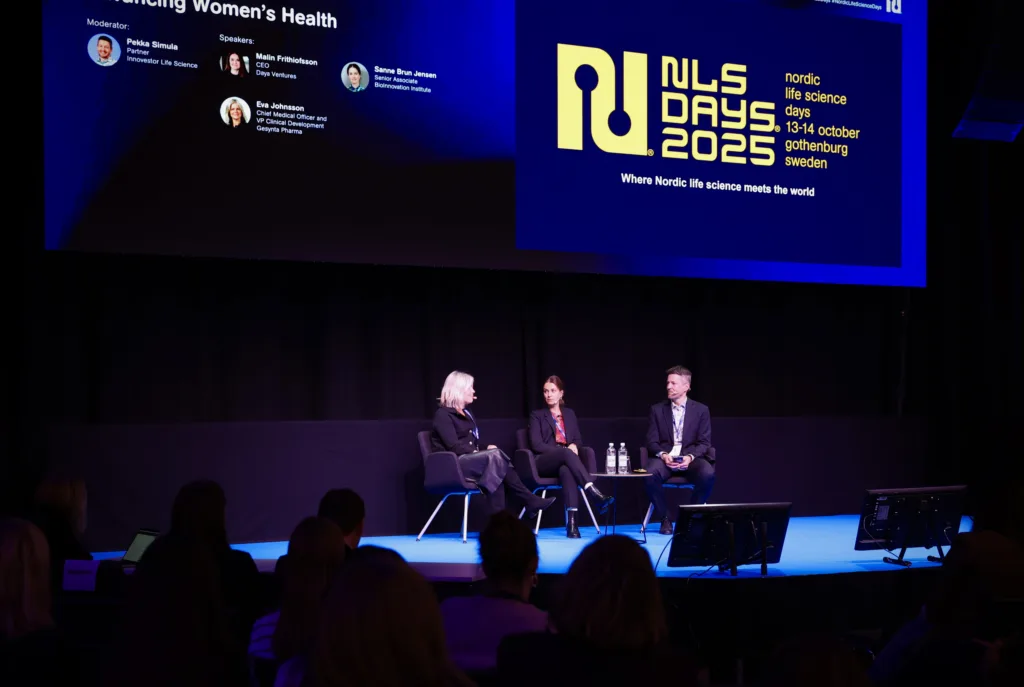
The Nordic region is globally recognized for its commitment to equality, innovation, and strong healthcare systems, yet even here, women’s health remains significantly underfunded, under-researched, and underserved.
A super session held at NLSDays 2025 in Gothenburg, Sweden, brought together leading voices from biotech, pharma, and the investment community to address this critical issue and explore the immense opportunity it presents.
The panel, moderated by Pekka Simula of Innovestor Life Science, an early-stage life science venture capital firm investing across the Nordics and Baltics, featured Sanne Brunn Jensen, Senior Associate at the BioInnovation Institute; and Eva Johansson, Chief Medical Officer and VP Clinical Development at Gesynta Pharma.
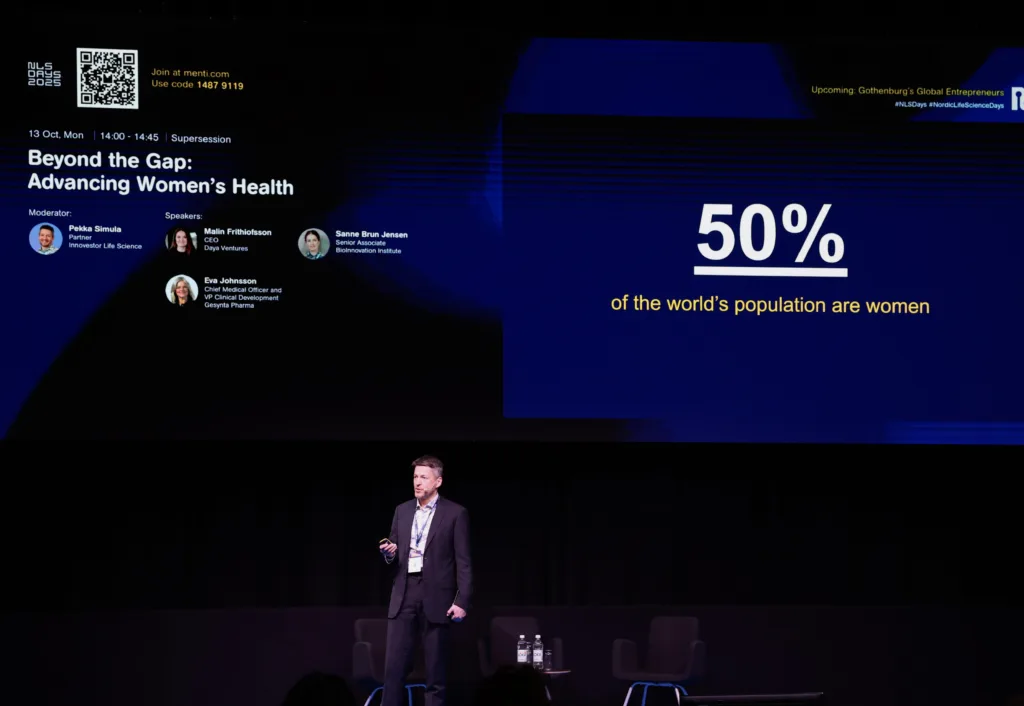
Even in the Nordics, where gender equality is relatively strong, men and women differ physiologically, and gender affects how diseases manifest. A classic example is heart attacks: women often present with symptoms considered “atypical”, not because women are unusual, but because research and diagnostics have historically focused on men.
Women’s health remains under-researched, with enormous unmet needs. Endometriosis affects an estimated 190 million women globally. Menopause affects around 1 billion. Pain studies reveal stark bias: men reporting pain are often described as “heroic,” while women reporting the same pain may be dismissed as “hysterical.”
And one more striking fact: women make up 50% of the world’s population, representing not only a massive healthcare need but also a major business opportunity. A recent McKinsey report estimated that in the U.S. alone, improving women’s health could represent a $100 billion opportunity by 2030.
Sanne Brunn Jensen, Senior Associate on the Venture Creation Team at the BioInnovation Institute in Copenhagen, also leads the institute’s Women’s Health Center of Excellence, launched 3.5 years ago with encouragement from the Bill & Melinda Gates Foundation. “We began by mapping where innovation and expertise existed across this broad and underserved field. We now collaborate with partners including Ferring and have built a dedicated advisory board of investors, industry representatives, and academic experts.”
She added that the institute now has 18 active startups working directly in women’s health and continues to source new projects globally.
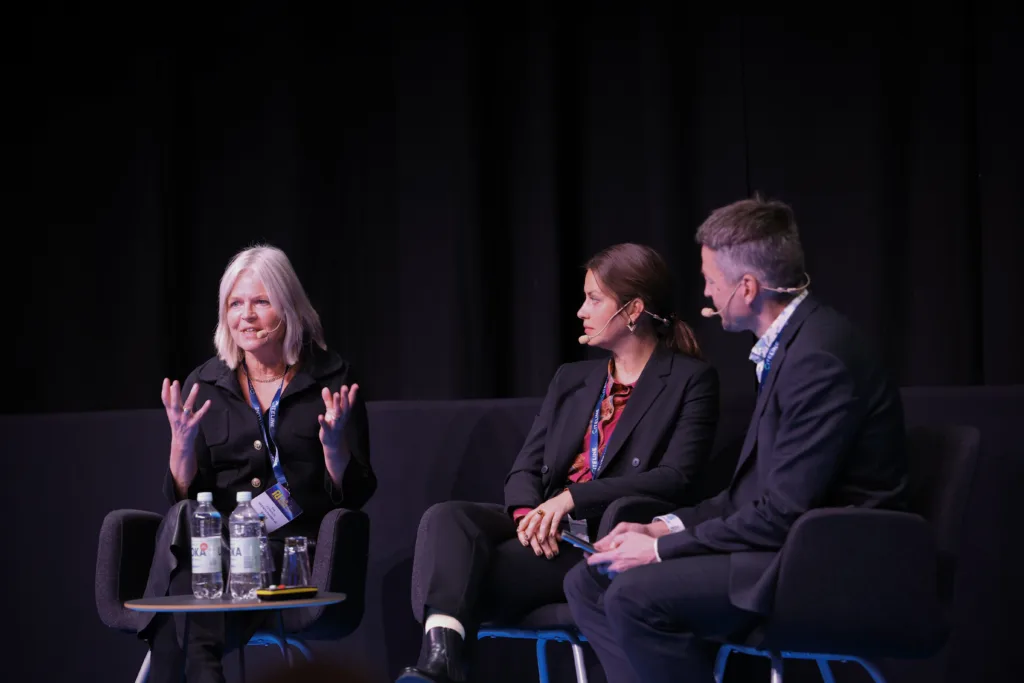
Eva Johansson, Chief Medical Officer at Gesynta Pharma, a small biopharma company developing treatments for pain and chronic inflammation, with a focus on endometriosis, explained that endometriosis affects 1 in 10 women of reproductive age and often causes severe pain and inflammation with enormous impact on quality of life. “There is a major need for new, mechanism-based, non-hormonal treatment options,” she said.
Johansson noted that general awareness of endometriosis remains low. “But if you ask people whether they know someone with severe menstrual pain, missed school or work, or chronic symptoms, then 80–90% recognize it. They just may not know the word ‘endometriosis’,” she said.
Responding to the question “Why do we need a women’s health panel? There’s no ‘men’s health panel,’” Sanne Brunn Jensen replied that the real question is why this conversation is only happening now. “Societal and cultural structures have long deprioritized women’s health. And even within ‘women’s health,’ there are many subfields with huge unmet needs. The business opportunity is also enormous,” she said.
Eva Johansson highlighted changes in women’s expectations as a key driver. “Especially younger women no longer accept suffering as ‘normal.’ Painful periods are not something you should just endure. Increased awareness drives demand for better care. Diagnostics have also lagged behind, but that is now improving.”
The panelists agreed that while the Nordics are ahead, variation is still wide globally. “In many regions, women’s health is still treated as something private, ‘natural,’ and not requiring medical attention,” Johansson said.
Pitching women’s health to investors
Pekka Simula noted that when his company raised Gesynta’s €35–40M Series B, they found that U.S. investors, especially male investors, responded more strongly to the business case (“190M patients”) than to the societal impact narrative.
Sanne Brunn Jensen had a similar experience: “One of our endometriosis companies was advised to reframe the project as fibrosis because investors understood fibrosis better,” she said, adding: “And surprisingly, many investors who can recite every oncology pathway know almost nothing about egg maturation or fertility biology. We’ve had to educate without sounding patronizing.”
Her advice to companies: be persistent, bring strong data, quantify the need, have market analysis ready, and “be prepared to educate – gently.”
The panelists emphasized that highlighting the business opportunity is essential because economic arguments resonate with both policymakers and investors.
Big Pharma and recognize women’s health
Discussing whether Big Pharma properly recognizes women’s health, Pekka Simula explained that many large companies now understand both the unmet need and the business case. “Historically, women’s health portfolios focused on breast cancer and reproductive health, but interest is expanding.”
Eva Johansson agreed, noting that large pharma companies in cardiovascular, autoimmune, and metabolic disease are increasingly including women earlier in trials and studying sex-specific differences.
“But we shouldn’t treat ‘women’s health’ as a single bucket. If a company focuses on cardiovascular disease, then pre-eclampsia fits their remit. If oncology, ovarian cancer. If fertility, maternal health. Breaking it down helps attract the right partners,” said Sanne Brunn Jensen.
Despite the challenges in advancing research and investment, the panelists agreed that women’s health finally has tailwinds – at least in the Nordics. There are encouraging developments: new preclinical models, dedicated hubs, and programs in Denmark, Finland, and Sweden. Collaboration across the Nordics is essential.
“Awareness is growing, funding is increasing, and society is demanding change,” said Eva Johansson.