
The new global dealmaking map: How China is reshaping biopharma partnerships, and what it means for the Nordics
Two-thirds of all biopharma dealmaking value so far this year has been created in collaboration with Chinese companies, up from just 4 percent five years ago. As China becomes a major source of innovation, deal structures are evolving, prices are rising and European companies are asking how they can stay competitive.
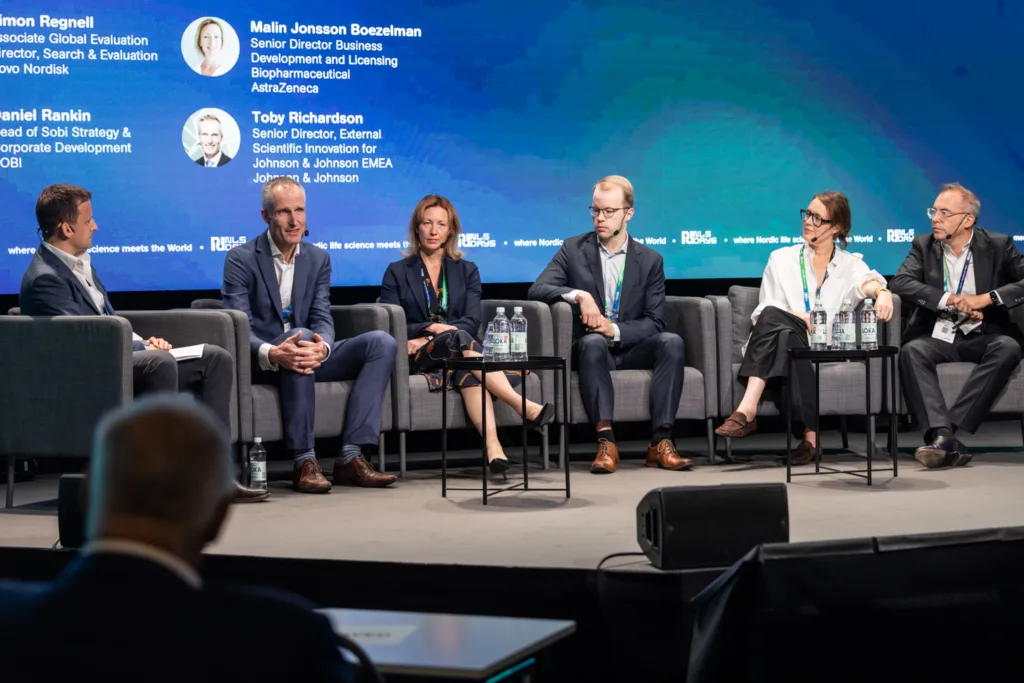
A super session at NLSDays 2026 in Stockholm explored how the rise of Chinese biotech is redrawing the global dealmaking map. Moderated by Daniel Chancellor, VP Thought Leadership at Norstella, the panel featured Toby Richardson, Senior Director, External Scientific Innovation EMEA at Johnson & Johnson; Malin Jonsson Boezelman, Senior Director, Business Development and Licensing at AstraZeneca; Simon Regnell, Associate Global Evaluation Director, Search & Evaluation at Novo Nordisk; Frances Stocks Allen, Partner at Cooley; and Daniel Rankin, Head of Strategy & Corporate Development at Sobi.
Chancellor noted that although only around one in six deals involves a Chinese company, those deals carry exceptionally high potential value. The deals are also shifting from one-off transactions towards longer-term partnerships around earlier-stage assets. Jonsson Boezelman described how AstraZeneca’s first licensing deal with a Chinese pharma company in 2024 grew into four further collaborations, including a joint venture in manufacturing. “Finding the right asset is important, but then you can build on that by building trust and establishing more strategic partnerships,” she said.
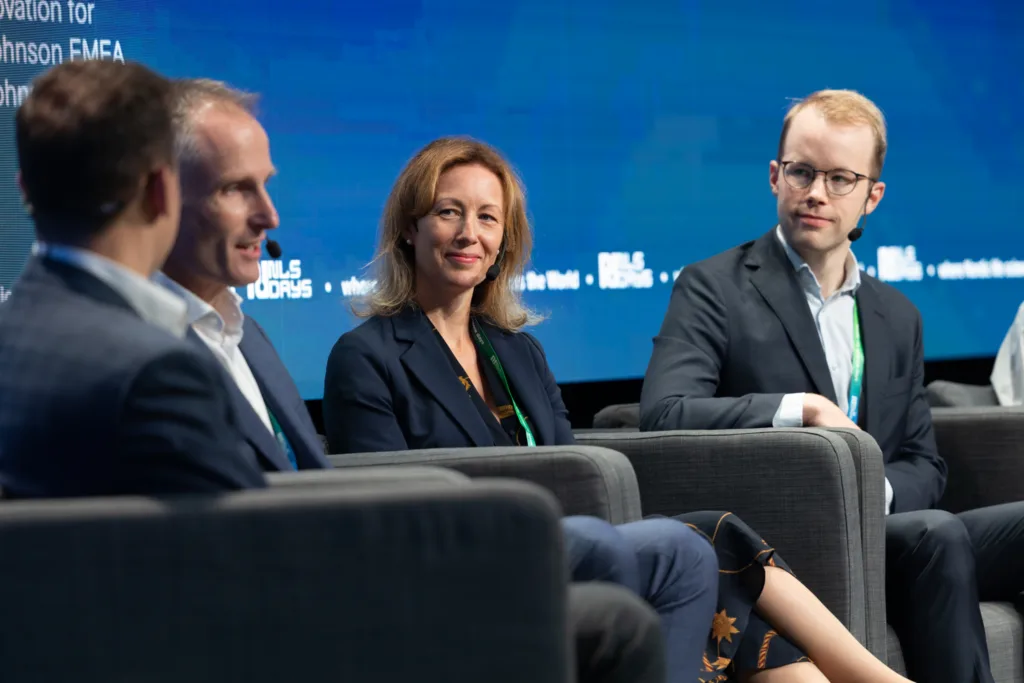
Regnell said China has become the most common country of origin among the companies he meets. Novo Nordisk licensed a triple agonist for obesity from The United Laboratories, a former generics and biosimilars maker that has turned to novel drugs following regulatory reforms in China.
Stocks Allen pointed to large multi-programme deals with Chinese companies as a form of outsourced R&D, giving Western pharma access to a whole discovery engine. Despite a strong year for M&A and licensing, she warned that the gains are unevenly spread: “Companies that have it all get it all, and the rest of the world is struggling to get good deals and good financing.” Her advice for both sides: “It is a mantra for our time to preserve optionality.”
Geography is also becoming harder to pin down. Rankin described Sobi’s acquisition of Arthrosi, a US company whose gout drug was designed by Chinese founders using Chinese CROs. “On paper, it was a Delaware deal. In practice, we were dealing with Chinese founders and Chinese shareholders,” he said.
“Going to China, it’s not about finding bargains anymore. It’s about finding world-class, differentiated assets.”
– Simon Regnell, Novo Nordisk
With thousands of drug candidates in Chinese pipelines, the panellists agreed that molecules are no longer scarce. “If you want a molecule, you’ll be able to find it in China for sure,” Jonsson Boezelman said. But the competition for the best assets is driving prices up. According to Stocks Allen, average upfront payments for China licensing deals roughly doubled in early 2026 compared with the same period last year. “Going to China, it’s not about finding bargains anymore. It’s about finding world-class, differentiated assets,” Regnell said.
US drug pricing policy is also affecting deals. Rankin said the threat of US Most Favoured Nation pricing has caused opportunities for deals outside the US to dry up, as biotechs fear putting the value of their business at risk. He warned that Europe faces an almost existential challenge: “There’s a real risk for patients that novel medicines won’t come to Europe if we don’t start to think about pricing and access in the right way and reward innovation appropriately.”
So how can the Nordics compete? Regnell advised start-ups to build on their unique scientific strengths “rather than making another GLP-1 or PD-1 and trying to face a thousand Chinese companies doing the same thing.” Richardson encouraged founders to approach big pharma early: “I want people to come to me as early as possible.”
Jonsson Boezelman highlighted collaborative environments such as GoCo Health Innovation City and AstraZeneca’s BioVentureHub, where young companies can grow alongside a large pharma company. Rankin agreed that the Nordic ecosystem is “a good place to start a company”, thanks to close connections between industry, physicians, CROs and regulators.
Richardson closed with a call for more confidence. “There’s still fantastic, brilliant innovation going on in EMEA and in the Nordics, and we have to champion it,” he said. “Other areas of the world certainly do, and they do sing about it.”